
Skip links

Delphi Survey Software

Build Consensus on Complex Topics

Setup a Delphi panel online in just a few minutes

Anonymity

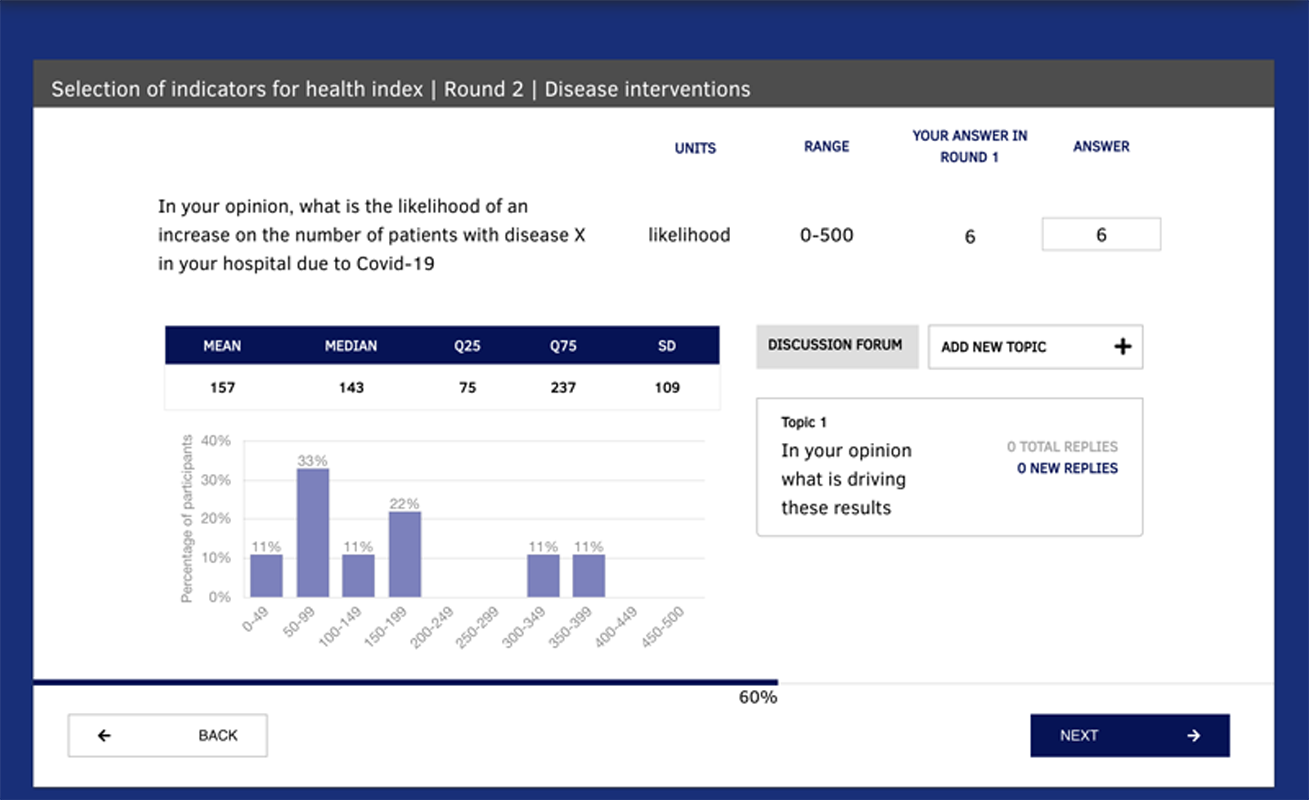
Controlled Feedback

Asynchronous Participation

Improving decision-making solutions around the world

Delphi Method

Delphi was developed at the RAND Corporation in the 1950s to forecast the impact of technology on warfare. Since its development, and given its underlying flexibility, the Delphi method has undergone different modifications and today there are several types of Delphi methods.

This ability to adapt to different real world problems makes it possible to find examples of Delphi processes on [3]: risk management, investment analysis, planning health services, policy and trend analysis and policy formulation.

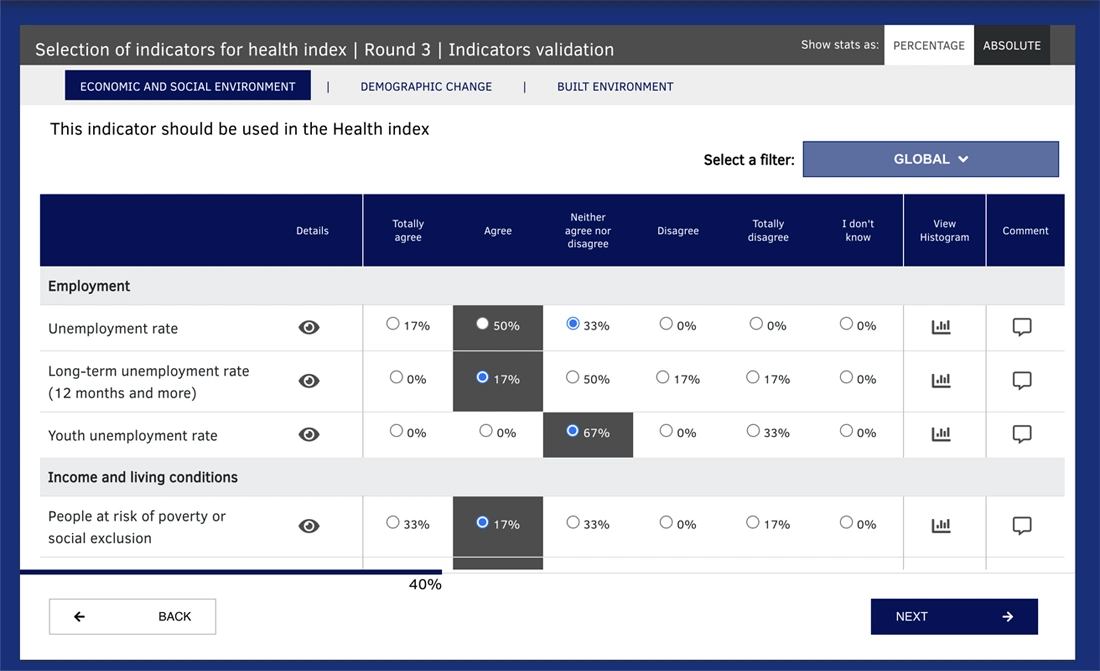
Welphi (delphi survey software) empowers you to effortlessly create, manage, and analyze your Delphi processes. Include page types such as informed consent, demographics, and several Delphi types with automatic statistics.

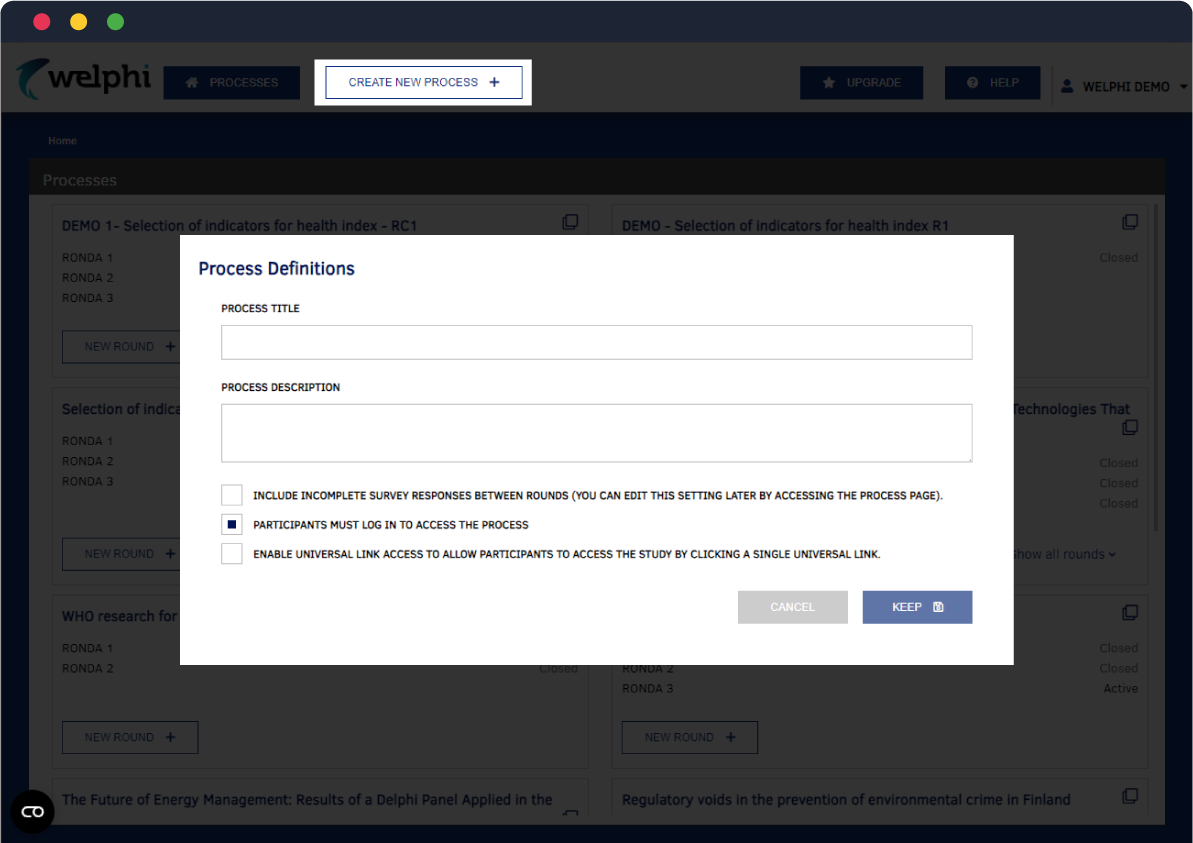
Setup process

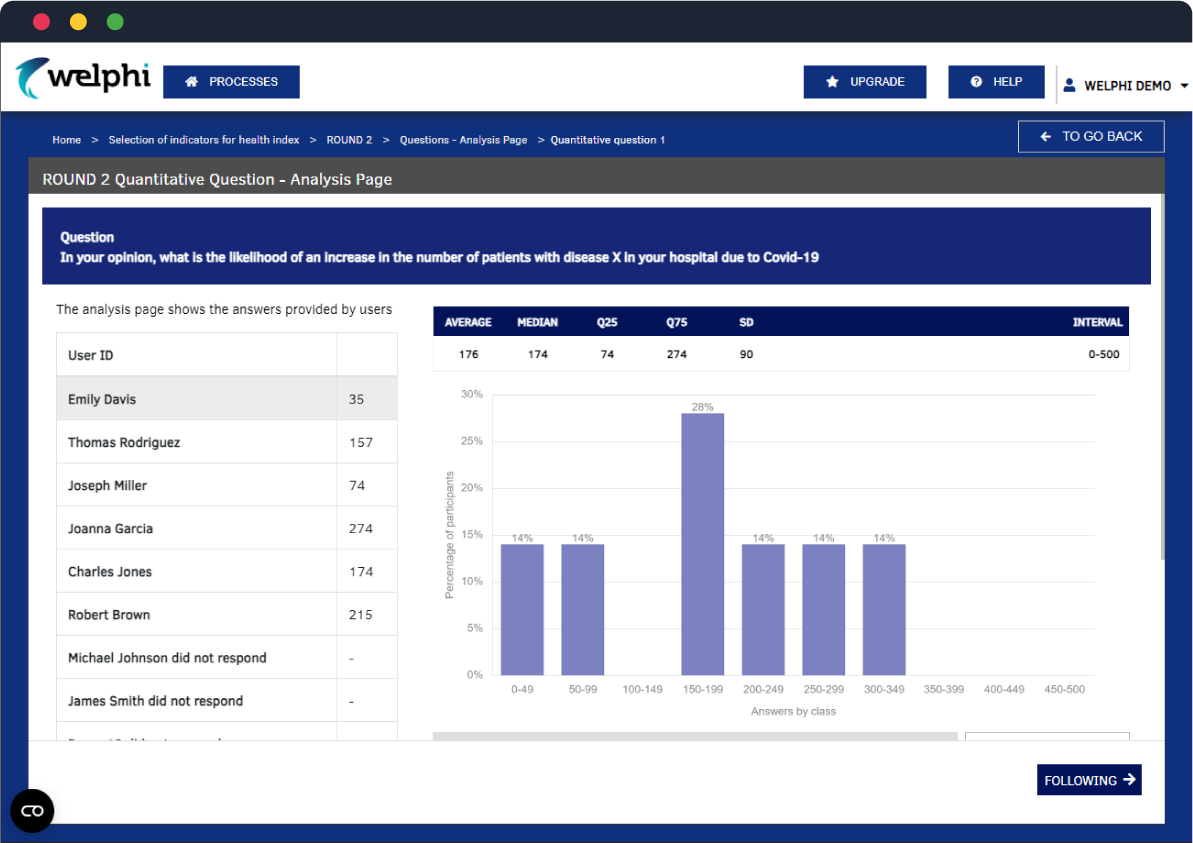
Create your process pages and questions, select your participants, and study settings

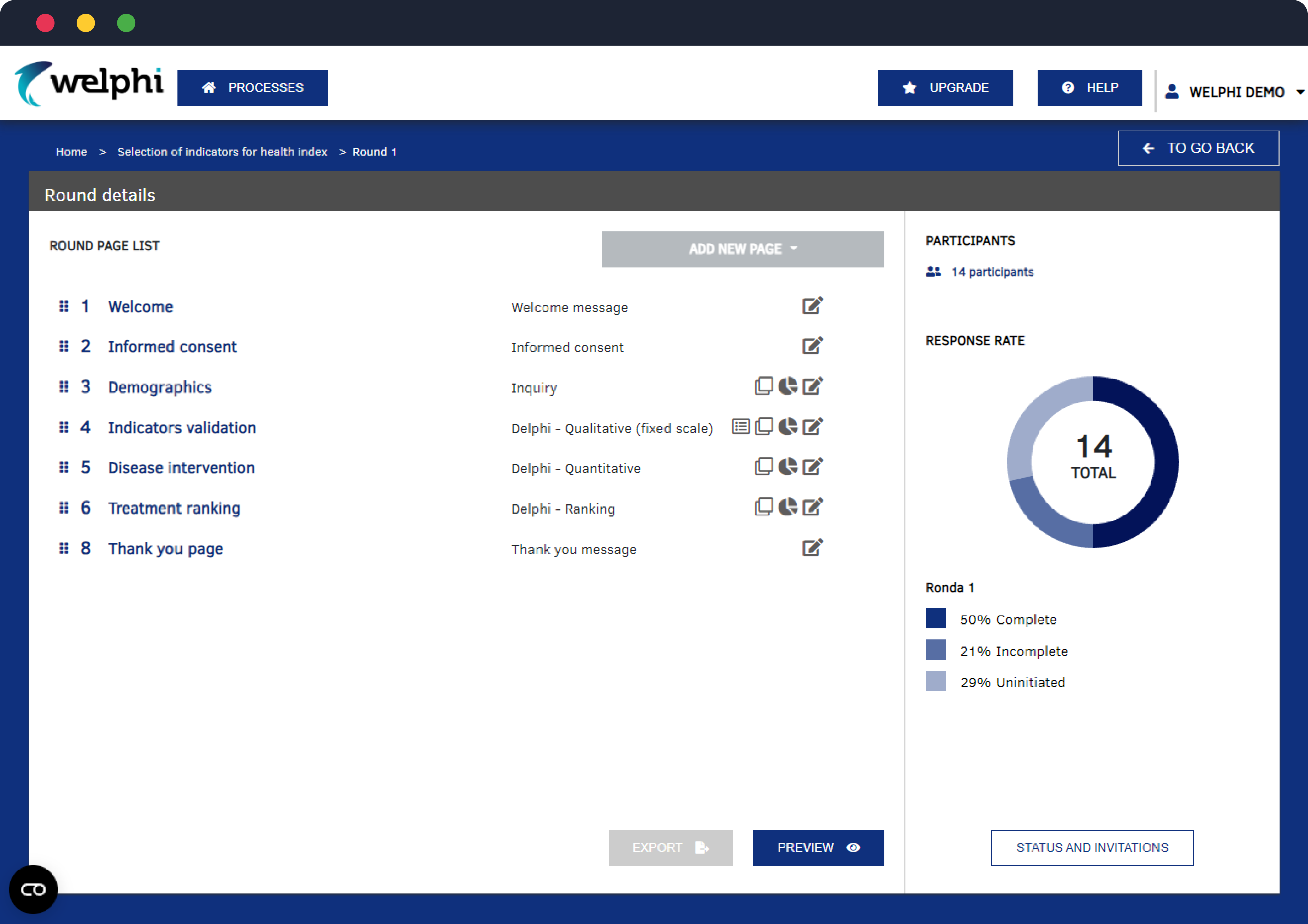
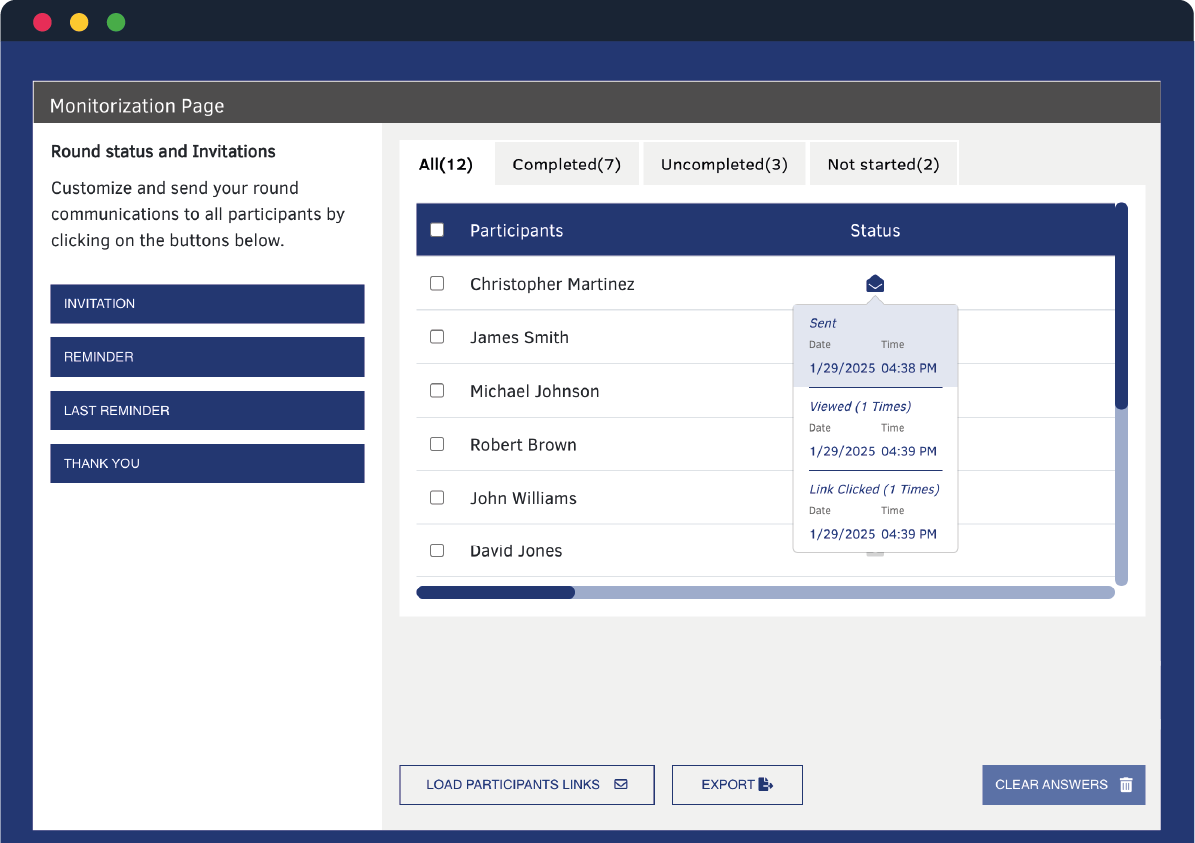
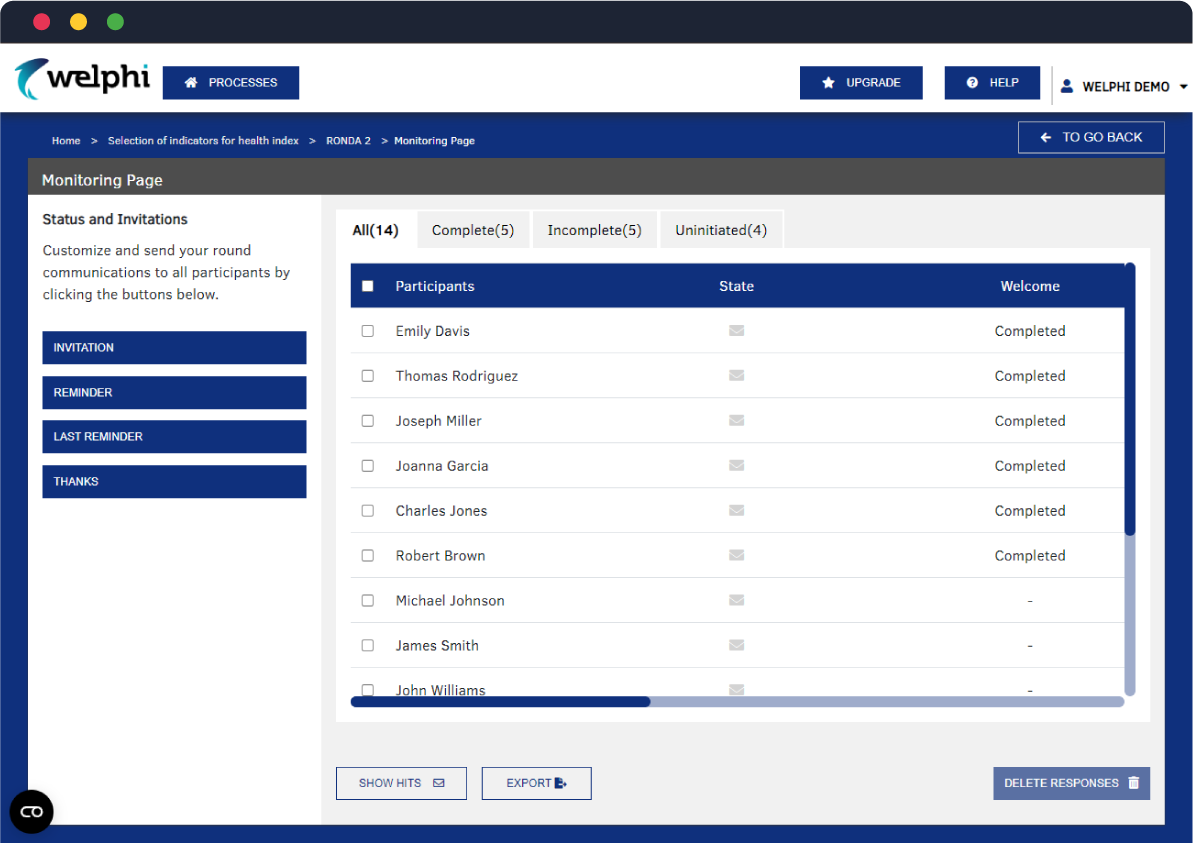
Monitor and communicate

Monitor you participants progress and send reminder e-mails easilty within the platform

Launch follow-up rounds

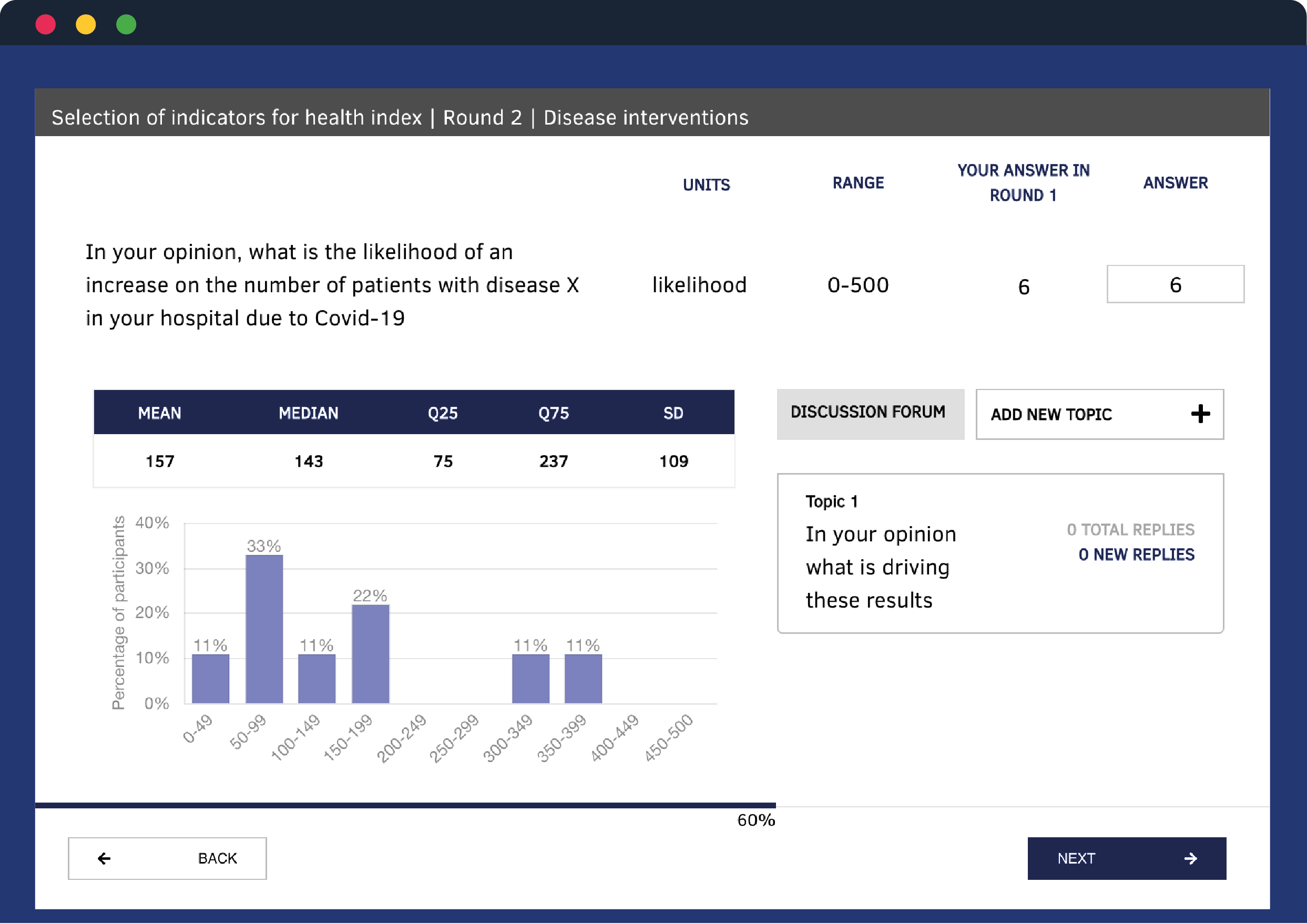
Automatically create follow-up rounds with statistics and comments and share with participants.

4 Advantages you need to know

Delphi survey software optimize the quality of the consesus and improves participation to make structural decisions on complex topics.

Anonymous

Ensure anonymity to reduce peer pressure

Controlled

Control the feedback provided to participants

Asynchronous

Allow participants to answer at their own rhythm to reduce drop-off

Attractive

A clean user interface helps participants go effortlessly through the questionnaire

Start your 14 days Free Trial

How we do it

Welphi makes creating Delphi panels online simple and effective. Its intuitive, guided process ensures methodological rigor, allowing users to build expert panels that adhere to best practices with minimal setup time. By balancing ease of use with robust methodology, Welphi (delphi survey software) streamlines consensus-building for impactful decision-making.

How We Do It

Welphi makes creating Delphi panels online simple and effective. Its intuitive, guided process ensures methodological rigor, allowing users to build expert panels that adhere to best practices with minimal setup time. By balancing ease of use with robust methodology, Welphi streamlines consensus-building for impactful decision-making.

Create your Delphi panel, setup the access mode and add your participants

Add a round and it’s pages. Then, add the questions to each page and that’s it.

To allow access to your study, just click send invite and monitor the send status

Check the stats automaticaly generated by Welphi and set consensus rules

Share the anonimous results (stats and comments) with the participants and collect new answers

Testimonials

Trusted by global organizations.

Sign Up and start a new process in a few minutes with our user friendly cloud web app.

32k

Participants

Rated 5 out of 5
85

Dayli Users

Rated 5 out of 5

These Companies Trust In Our Software To Get Consensus

No more complex analysis and face-to-face meetings.
Start your 14 day trial and start making better decisions.

Frequently Asked Questions.

Welphi operates in rounds, similar to the standard Delphi method. However, unlike the traditional Delphi, where feedback from one round is shared with participants before the next round starts, Welphi shares the feedback from one round with the participants during the next round. This allows participants to consider changing their opinions while viewing the automatic statistics generated by Welphi and the anonymous comments provided by other participants. By definition, since it is an online platform, you can call your process an e-Delphi.

Given the difference in how statistics are shared (among other changes), this is also a modified Delphi. After each round, you just need to click the “Add new round button,” and Welphi will automatically create a new round as a copy of the previous one, including aggregated statistics from the participant’s answers. You can implement consensus rules to filter questions already approved from showing up in the next round.

The Delphi Method is a structured method of forecasting and communication employed to establish and establish the consensus of an expert group on an intricate topic or problem. It is basically rounds of anonymous surveys that are sent to a panel of experts. Following each round, facilitators review the results and give aggregated feedback to participants, encouraging them to rethink their positions with regard to the perspectives of the group. This process of anonymity and iteration eliminates biases of the group and social pressure, encouraging impartiality and helping to come to a more informed group opinion which is ideal for making decisions in uncertain situations.

Through Welphi, the Welphi platform, the process of obtaining results using the Delphi method can be improved through process automation. After completing each round Welphi automates the process of aggregating and combining responses, creating reports and statistics of comments that are anonymous. The results are utilized to plan future rounds and are given to experts as feedback. This helps experts adapt their perspectives and come to a consensus quickly and with a well-organized method.

Welphi works by rounds. Only when one round ends can you launch a new one where your participants can see the statistics based on the previous round’s answers.
However, since Welphi creates all new rounds automatically as a copy of the previous one, creating a similar setup as an RTD is straightforward. You just need to keep creating new rounds so that when your participants return to the questionnaire, they see updated statistics.

Welphi fosters consensus in Delphi studies by ensuring expert anonymity, which removes social pressures and promotes honest opinions. It then automates the iterative feedback loop, presenting aggregated statistical summaries and anonymized qualitative comments from previous rounds directly to participants. This clear, structured feedback enables experts to reflect on their positions and adjust their views in light of the group's evolving stance, efficiently guiding the entire panel towards a shared understanding and ultimate consensus.

Every time you want to get the answers from the participants you want to invite, you need to set up a round. A round begins when you invite participants, and ends when you decide you have enough answers. Once the first round is finished, you can use Welphi’s tools to analyse the data. After this, you can set up another round so that participants are allowed to see the statistics of the other users’s answers as well as the comments they may have written. The goal is that, through several rounds, the group can get closer to a consensus.

A Delphi study is often composed of multiple rounds as its core principle involves gathering expert opinions through iterative feedback cycles. While no universal number of rounds applies for every study conducted using Delphi methodology, each may vary based on research objectives and when an agreed upon consensus level has been met.

Delphi studies typically involve at least two rounds to allow for iterative feedback and modification of opinions, though published examples often take on three to four. Though longer rounds could potentially increase panelist engagement and responses stability. Once consensus or stability have been attained or observed by panelists, then further iterations occur until an acceptable solution emerges from these iterations. The process continues until either consensus has been attained or enough responses remain stable enough.

No. To help the questionnaire be cleaner to the participants, you can add category field to the elements to aggregate them in groups. Imagine you are asking validation about criteria to build an index, you can add a field named “Area” and define to each area does each criterion belong. This way, the questionnaire will be splitted in a screen for each area thus making it much easier for participants to answer.

Yes, anonymity of participant responses is central to the Delphi method and Welphi is specially tailored to ensure it. This platform ensures that responses and opinions provided by experts remain private; no participant knows any participant's specific answers. Anonymity is crucial as it reduces social pressure, negates dominant personalities' influences, and encourages experts to express honest, impartial opinions for a more objective distillation of collective wisdom. While study administrators typically see who has responded for tracking purposes, individual responses will typically remain anonymous before being aggregated back with panelists for review and sharing back.

Healthcare and medicine, science and technology forecasting, education, business and management. Other significant areas include environmental studies (for risk assessment, climate change impact prediction, and sustainability strategies), public policy (for developing comprehensive policy frameworks on complex issues like economic inequality or social reform), and urban and regional planning.

Furthermore, it finds use in project management for scope and risk management, identifying potential hazards, and gaining stakeholder consensus on project requirements.

There are no limit. Also, you can change add and remove participants at any time.

Latest Posts

Here you can find the most innovative, accurate and interesting information throught news and blog posts.​

Want to receive Welphi updates?

No worries, we don’t spam your inbox.

Delphi Survey Software

Delphi Survey Software is a digital tool designed to streamline and optimize the application of the Delphi method, a structured approach for collecting and consolidating opinions from a group of experts. This iterative and anonymous method involves multiple rounds of questionnaires, with summarized feedback of the results provided to the experts after each round. The primary goal is to achieve a consensus or a common understanding on a complex topic, forecast, or problem. By digitizing this process, Delphi survey software removes logistical barriers and enhances efficiency, allowing researchers and organizations to conduct Delphi studies more effectively.

The importance of Delphi survey software lies in its ability to transform an otherwise time-consuming and manual-error-prone process into a smooth and automated operation. One of its main benefits is the efficient achievement of consensus. It greatly facilitates the convergence of opinions among geographically dispersed experts, overcoming challenges in gaining consensus and ensuring stakeholder buy-in. The anonymous nature of the responses minimizes group pressure, encouraging more honest and unbiased opinions, which is crucial for obtaining high-quality insights.

Furthermore, Delphi survey software significantly optimizes the leveraging of expert knowledge. It allows for the systematic and structured collection of knowledge from a panel of specialists, harnessing their collective experience to address complex questions, make predictions, or develop strategies. The iterative rounds and consistent feedback help refine evaluations, leading to more accurate and precise results over time. This structured approach ensures that the best available expert knowledge is utilized effectively for decision-making or forecasting.

Another key advantage is automation and error reduction. The software automates crucial tasks such as questionnaire creation, invitation distribution, response tracking, statistical analysis, and the preparation of follow-up rounds. This eliminates the need for manual reconciliation and significantly reduces the risk of errors in data transfer and analysis, thereby optimizing both time and resources. This automation allows researchers to focus more on the qualitative aspects of expert input rather than the logistical challenges.

Finally, Delphi survey software offers considerable flexibility and adaptability. It supports a wide range of question types and can be configured for specific study needs, making it suitable for diverse applications, from project management and strategic planning to academic research and technological forecasting. Real-time Delphi functionalities allow for immediate analysis and visualization of data, further expediting the decision-making process by providing instant insights into expert consensus and divergence.

In summary, Delphi survey software is an indispensable tool for anyone seeking to harness the power of collective intelligence in a structured, efficient, and impartial manner, ensuring high-quality outcomes for their project.